Grand Aunt Maggie Ingold and the Long Grove Asylum
Recently I broke through the final “brick wall” in my family tree. What ever happened to my Grandfather George’s spinster sister..?
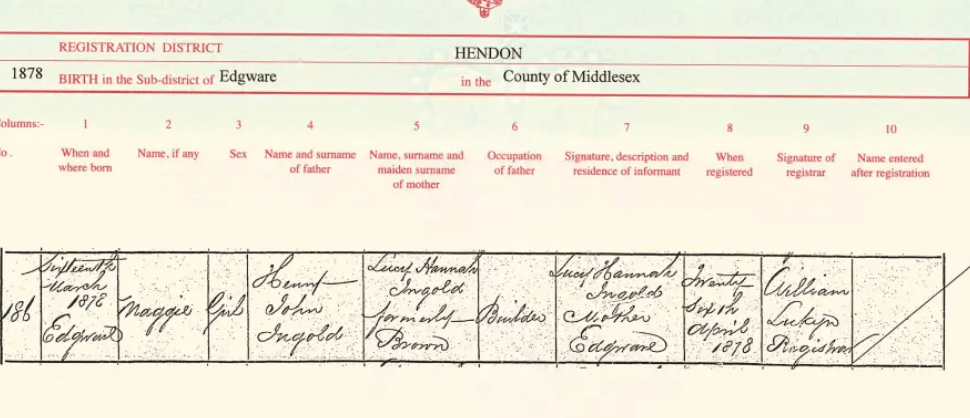
Maggie was born on March 16, 1878 making her 6 years older than George. She appears in both the 1881 and 1891 censuses as a daughter living with the family in Edgware.
By age 17, she had lost both parents.
From BritishNewspaperArchive.co.uk I learned she participated in plays and music programs, taught school at age 16 for 4 shillings a week, and was a bridesmaid at her sister Edith’s wedding.
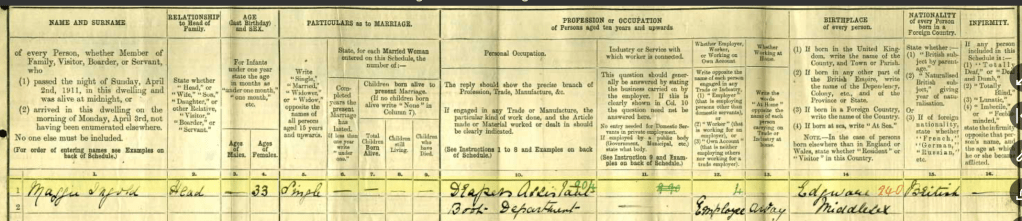
Maggie is missing from the 1901 Census, but in 1911 she is a 33 year old spinster living in 2 rooms in Paddington and working as a Draper’s Assistant (Shopgirl).
After 1911, nothing – no records whatsoever in regard to Maggie – no directory entries, no voting records, no travel, no workhouse and most importantly, no death record. In 2016 I realized I would have to wait 6 years for the 1921 UK census. It was a long 6 years.
In the meantime, I developed some wild theories about what happened to her: perhaps she was one of the victims of the great 1911 heatwave in England, or succumbed to the Spanish Flu around 1918. I also clung to my father’s anecdote that one of his aunts had drowned in Lake Winnipeg (now debunked).
Imagine my disappointment when, after 6 years of waiting for the release of the UK 1921 census in January 2022, Maggie was not there! How does someone just disappear? It was as if she didn’t want to be found, even in death.
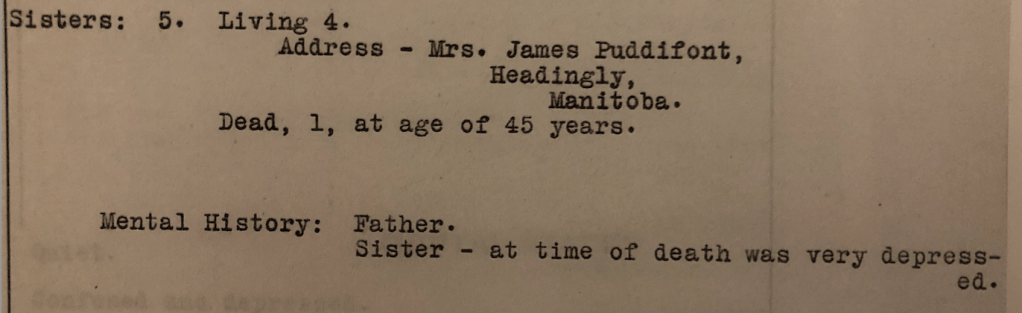
It was when I came into possession of my grand uncle Frank’s asylum records that I learned solid information about Maggie. Frank’s patient record notes the family history of melancholia, citing his father’s suicide and a sister who suffered from depression and died at age 45. Since I knew the death dates for all the Ingold siblings, this “sister” could only be Maggie Ingold, who would have been 45 in 1923.
I now had the approximate year of her death thanks to Frank’s records. So, I went back to the 1921 UK census and found an interesting entry contained on a patient register from Long Grove Mental Hospital, Epsom, Surrey: “Freda Ingold, age 43, born in Edgware, single, a draper’s assistant”, the identical information as in Maggie’s 1911 census form save for the given name. I had finally found my grand-aunt.
Sometime after the 1911 census, for whatever reason, Maggie took to calling herself “Freda”.
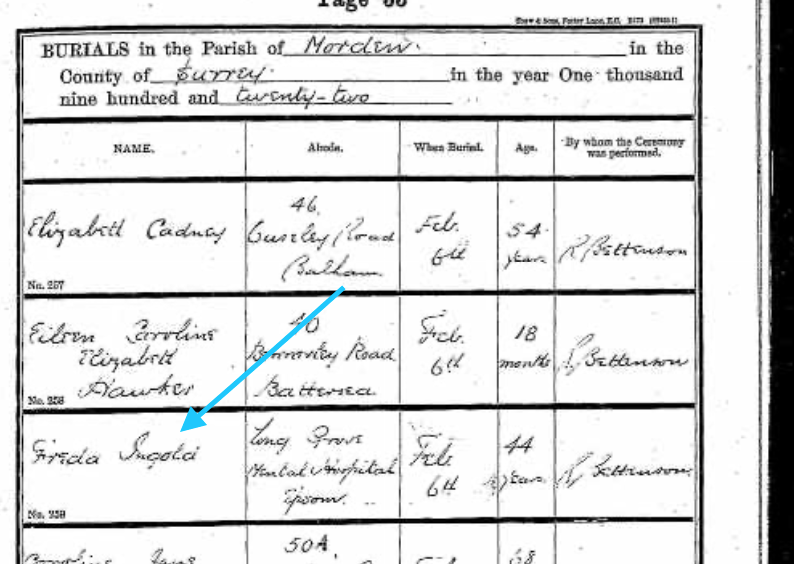
On FindMyPast.co.uk I found a burial record for “Freda” Ingold who died in the Long Grove Mental Hospital in early February, 1922 at age 44 and was buried in a pauper’s grave in Morden, Epsom, Surrey.
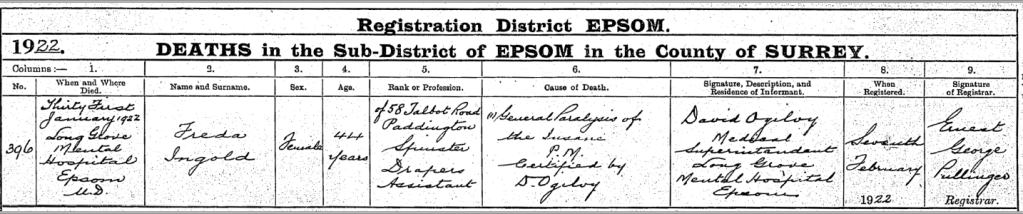
So, why did Maggie Ingold re-name herself as “Freda”? I wondered if she had some sort of dissociative identity disorder, but when I ordered her actual death certificate, the story became clear: Tertiary Syphilis
Cause of Death: “General Paralysis of the Insane” (GPI)- a fatal disease brought on by tertiary syphilis. GPI was more common in male patents and usually appears 10-30 years from the date of infection, meaning Maggie could have been a young teen when she contracted it or as old as 30.
Symptoms of General Paralysis (Paresis) of the Insane
Delusions can be grandiose, melancholic, or paranoid including ideas of great wealth, immortality, thousands of lovers, unfathomable power, apocalypsis, nihilism, self-guilt, self-blame, or bizarre hypochondriacal complaints. Later, the patient experiences jerks, confusion, seizures and severe muscular deterioration. Eventually, the paretic dies bedridden, cachectic and completely disoriented.
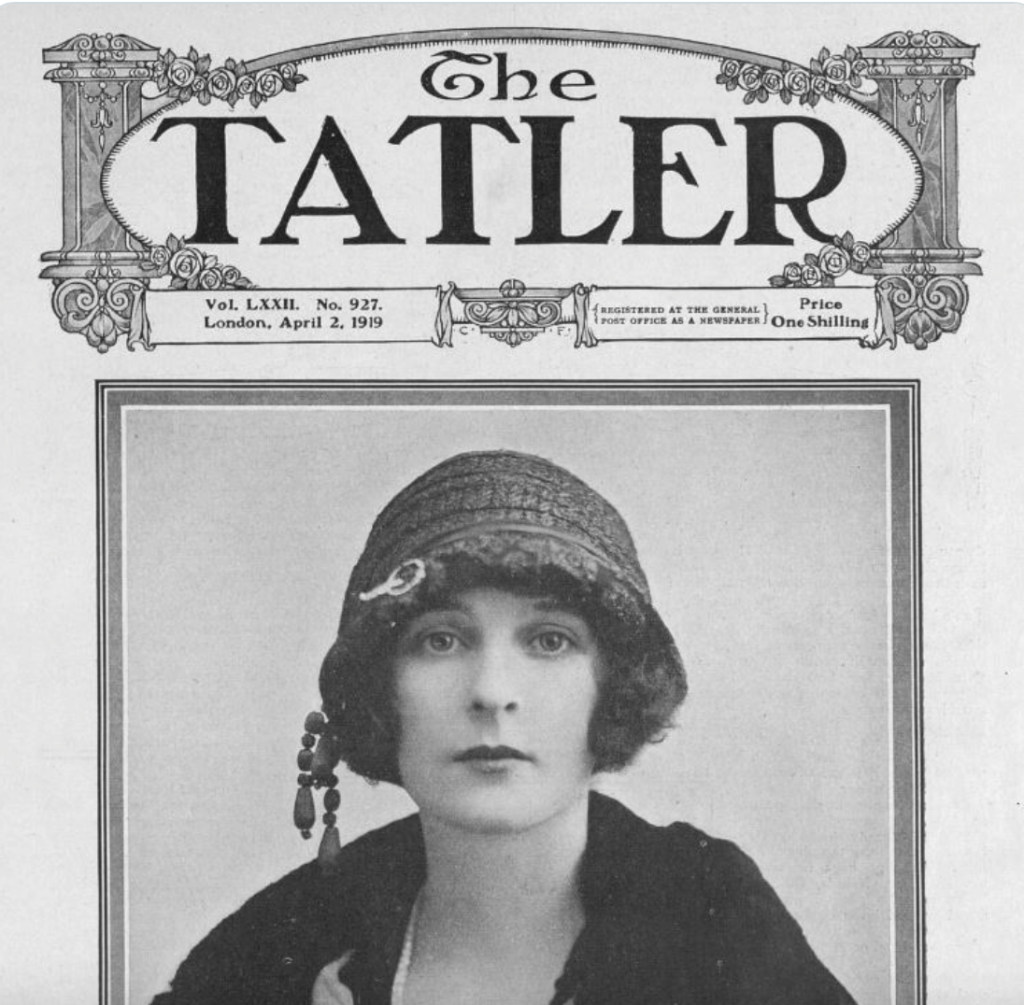
Freda Dudley Ward on the cover of “Tatler”, April 1919
It’s entirely possible that “delusions of grandeur” were a symptom of her condition and she fancied herself a celebrity.
I love history, classic film, the arts, big-city life and genealogy. I am lucky enough to have an unusual surname which has made my family search all the easier.
View all posts by ingoldpamlynn


 Grave Digger